


Why Fall Rains Are Hard on Texas Foundations After Summer
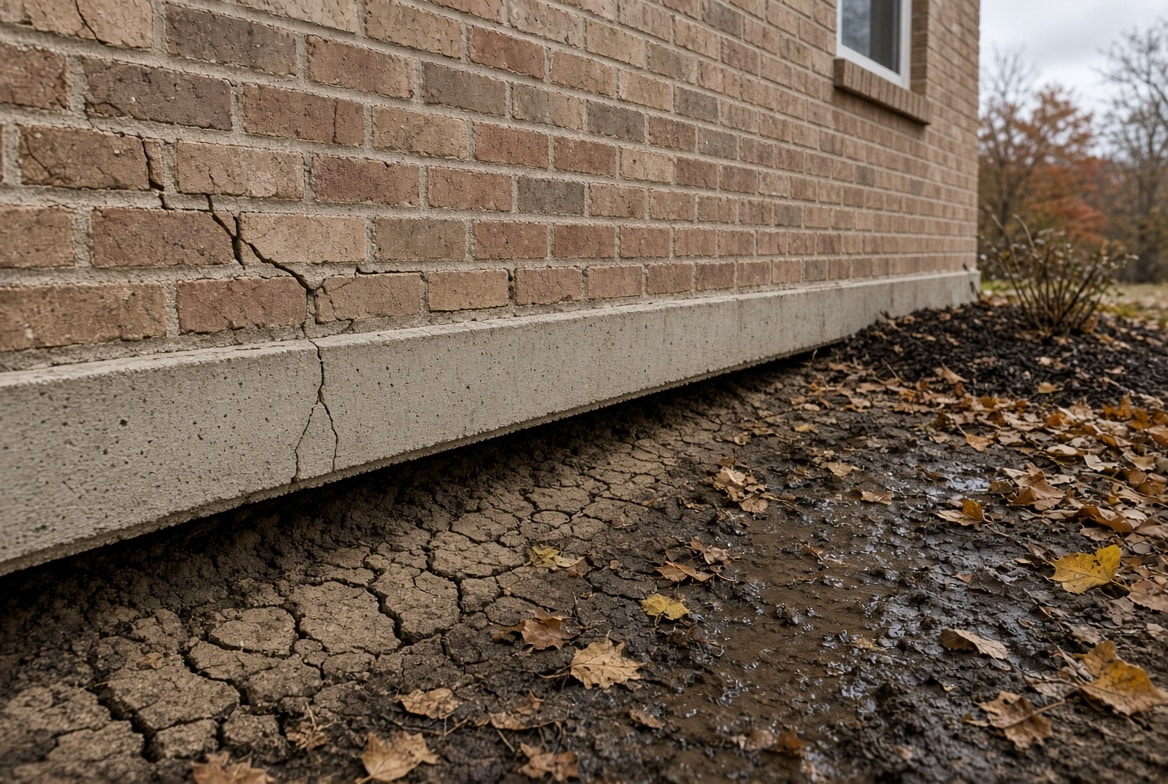
North Texas foundations sit on clay that changes volume with moisture. That single fact explains why the first heavy rains after a dry summer deserve respect. During hot weather the soil dries, shrinks, and can pull away from the edges of a slab. The house may look unchanged while support under parts of the foundation becomes less even. When fall storms arrive, the same clay takes on water and expands. If the expansion is uneven, the slab can lift in one area, lag in another, and telegraph the movement into brick, drywall, doors, and floors.
The summer shrink comes first
By late summer, expansive clay around many North Texas and DFW homes has been losing moisture for months. As it dries, it contracts. Homeowners sometimes see a gap where soil has pulled back from the foundation or notice that beds and borders sit lower than they did in spring. That shrinkage does not always mean the foundation has failed. It does mean the ground under and around the slab is no longer in the same condition it was in during a wetter season. A dry perimeter can also hide the real issue: when water returns, it may rush into cracks and low spots instead of spreading evenly.
The autumn swell is the stress test
Fall rain changes the equation quickly. A slow rain may wet the surface and stop. A deluge after a dry spell can send water into the shrunken zone around the house, especially where gutters overflow or downspouts discharge close to the slab. The clay swells as it absorbs that water. Because one side of a house may get more runoff than another, the swelling is rarely uniform. One corner can heave while the middle stays closer to its summer position. That differential movement is what stresses finishes and frames, even when the total lift sounds small.
Why late October through December matters
Late October through December is the season to watch because the weather and the soil are moving in opposite directions. The ground starts fall dry from summer heat, then storms, cold fronts, and shorter days change how quickly moisture evaporates. A house can go from a watering routine to repeated soaking in a few weeks. The risk is not one rainy day by itself. It is the swing: dry soil, sudden water, uneven drainage, and then more rain before the ground has settled into a steadier pattern.
Signs the slab may be moving
Movement often announces itself indoors before a homeowner studies the slab. Doors that latched in September may rub by November. A window may need a shoulder instead of a hand. Brick mortar can open in a stair-step pattern that follows the joints. Drywall may crack near corners, ceilings, or door frames, and a floor that felt flat can develop a noticeable roll. One sign by itself can have another cause, including normal seasonal change. A cluster of new signs after heavy rain is the pattern worth taking seriously.
What to do during the window
The fall goal is not to keep the foundation wet or dry. It is to reduce sharp swings. Keep gutters clear so roof water does not pour over the edge. Send downspout water several feet away from the house. Maintain a grade that falls away from the perimeter, roughly six inches over the first ten feet where the lot allows it. If rains are scarce, do not abandon foundation watering all at once; taper it so soil moisture changes gradually. Small corrections made in October are easier than emergency decisions in December. Our fall foundation checklist walks the whole perimeter routine in order.
Frequently asked questions
Q: Why do fall rains cause more foundation movement than spring rains?
A: After summer, the clay is dry and pulled back from the slab. A heavy fall rain adds water fast and unevenly, so one part of the foundation can lift while another stays put.
Q: What are the earliest signs of fall foundation movement?
A: Look for new stair-step cracks in brick mortar, fresh drywall cracks, doors or windows that suddenly stick, and floors that feel less level than they did a month ago.
Q: Should I stop watering my foundation when the weather cools?
A: No. Shift to a slower, steadier routine. Soaker hoses placed 12 to 18 inches from the slab can help keep moisture more even while drainage carries storm water away.
A sensible next step
If new cracks or sticking doors show up after the fall rains, an evaluation from Atlas Foundation Co. can help sort out whether drainage, moisture swings, or slab movement is driving the change.