
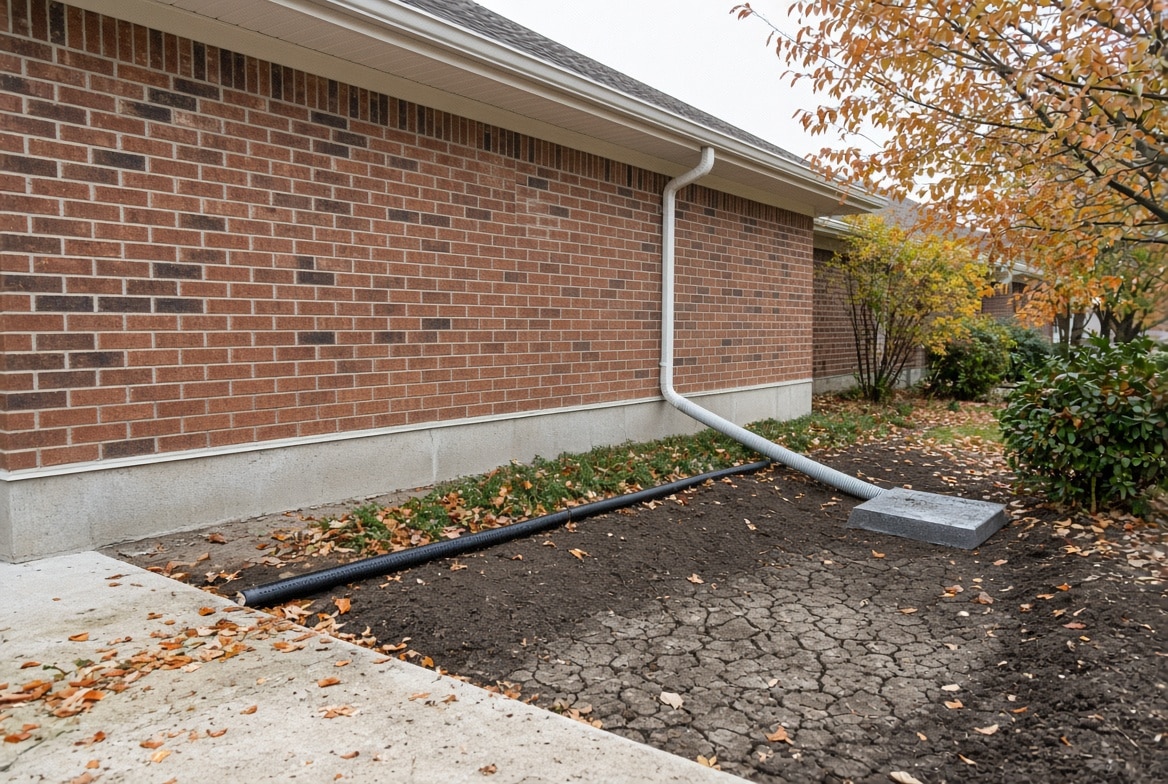


A Fall Foundation Checklist for North Texas Homeowners
A Texas foundation likes boring weather. Fall is not boring. The soil starts the season dry from summer heat, then storms can soak one side of a house while the other side stays comparatively dry. A fall checklist cannot change expansive clay, but it can remove the easy problems: roof water dumped at the slab, soil that swings from parched to saturated, low spots that hold water against the house, and warning signs that get ignored until winter.
Start with the water that lands on the roof
Clean the gutters before leaves and roof grit turn them into troughs that spill over. During a hard rain, an overflowing gutter can deliver a steady curtain of water right beside the foundation. Check that downspouts are open and firmly connected. Then look at where they end. Water should discharge several feet from the house, with four to six feet a practical target for many homes. Splash blocks that dump at the base of the wall are not enough after a dry summer, when the first runoff can run straight into the shrunken gap beside the slab.
Transition the watering routine; do not just stop
Many homeowners water the foundation in summer and shut the system off when the first cool front arrives. In North Texas clay, the sudden stop can be its own problem. If fall rain is regular, reduce the routine gradually. If the forecast turns dry again, keep a slow cycle going. Place soaker hoses 12 to 18 inches from the slab, not against it, and run them long enough to add moisture evenly without flooding beds or creating mud at the perimeter. Yard sprinklers can help, but they often wet one zone deeply and miss another; the goal is consistency around the whole house.
Fix the grade while the ground is workable
Walk the perimeter after a rain and again when it is dry. Look for soil that slopes toward the house, depressions where water stands, mulch piled high against brick, and beds that trap runoff. The ground should fall away from the foundation, roughly six inches over the first ten feet where the lot allows it. Fill low spots with soil and compact it in layers rather than leaving loose dirt that will wash out in the next storm. Keep the top of the soil below the slab edge and weep holes; raising the grade too high can create a different moisture and pest problem.
Do a movement check inside and out
Pick a calm hour and test the doors and windows you use every day. Note which ones stick, which latches miss, and whether the problem is new. Outside, look for stair-step cracks in brick mortar and separation at corners. Inside, check drywall near door frames, ceilings, and the junctions where walls meet. Floors deserve a slow walk too; a new slope or bounce is worth noting even if you cannot name the cause. Write down the date and take a few phone photos. A record from October makes a December change easier to judge.
Know when the checklist ends
Some items are maintenance. Others are a sign to stop guessing. Book a professional foundation and drainage evaluation when cracks are new or widening, doors and windows will not latch, floors feel sloped, or water still pools by the house after gutters, downspouts, and grade have been corrected. An evaluation is also wise before you patch cosmetic cracks for the season, because fresh paint and mortar can hide the very movement you need to understand. Movement that does not follow the weather can point under the slab; see what a hydrostatic test can rule out.
Frequently asked questions
Q: How far should downspouts discharge from the house?
A: Several feet is the goal, and four to six feet is a practical target for many homes. The point is to keep roof water from dumping beside the slab and soaking one strip of clay.
Q: Where should soaker hoses sit, and how should they run?
A: Place soaker hoses 12 to 18 inches from the slab and run them on a slow cycle. You are trying to keep moisture steady around the house, not soak one side after a dry week.
Q: When is a checklist item really a call-an-expert item?
A: Book an evaluation when cracks are new or growing, doors and windows stop latching, floors slope, or water keeps pooling by the house after you have corrected gutters and grade.
A sensible next step
If the checklist turns up movement you cannot explain, Atlas Foundation Co. can evaluate the foundation and the drainage around it so the next step is based on the cause, not a guess.