


What a North Texas Freeze Does to Your Foundation and Plumbing
A North Texas freeze rarely cracks a foundation the way northern winters can. The damage arrives by a side door. When temperatures stay below freezing, exposed plumbing is the first thing at risk, and a pipe that splits during the freeze often does its real harm after the thaw, leaking under a slab where nobody can see it. At the same time, frozen surface moisture and the dry cold around it make the soil around a house less even than it was in the fall. Understanding both halves of a freeze, the plumbing half and the soil half, tells a homeowner what to protect beforehand and what to check afterward.
What happens to the soil around your foundation in a freeze?
The top layer of soil holds moisture, and moisture expands when it freezes. In North Texas the freeze is usually shallow and short, so deep frost heave of a slab is uncommon. The quieter effect is unevenness. Shaded soil on the north side of a house freezes sooner and thaws later than soil on the sunny side. Beds under roof overhangs stay drier than open yard. The clay that was already managing a dry winter now has one more source of difference from one side of the house to the other, and foundations respond to difference more than to any single condition. A freeze does not have to lift a house to matter; it only has to make the ground under it less uniform.
Why is the plumbing the bigger freeze risk?
Because the water in a pipe has nowhere to expand. Lines in a pier-and-beam crawl space, outdoor faucets, and supply lines in exterior walls are the most exposed, and Atlas’s pier and beam foundation repair work regularly finds crawl-space plumbing that was never insulated. Under a slab, lines are protected by the ground and the house’s heat, but a break at a fitting or an older line can still follow a hard freeze. The dangerous part is timing. A split pipe under pressure may spray immediately, but a cracked drain or a slow supply leak can release water quietly for weeks. That water goes into the soil under the slab, swells the clay in one spot, and can lift part of the foundation while the homeowner is blaming the weather. This is the same mechanism as any leak under the slab, with a freeze as the starting event.
What should you do before and during a freeze?
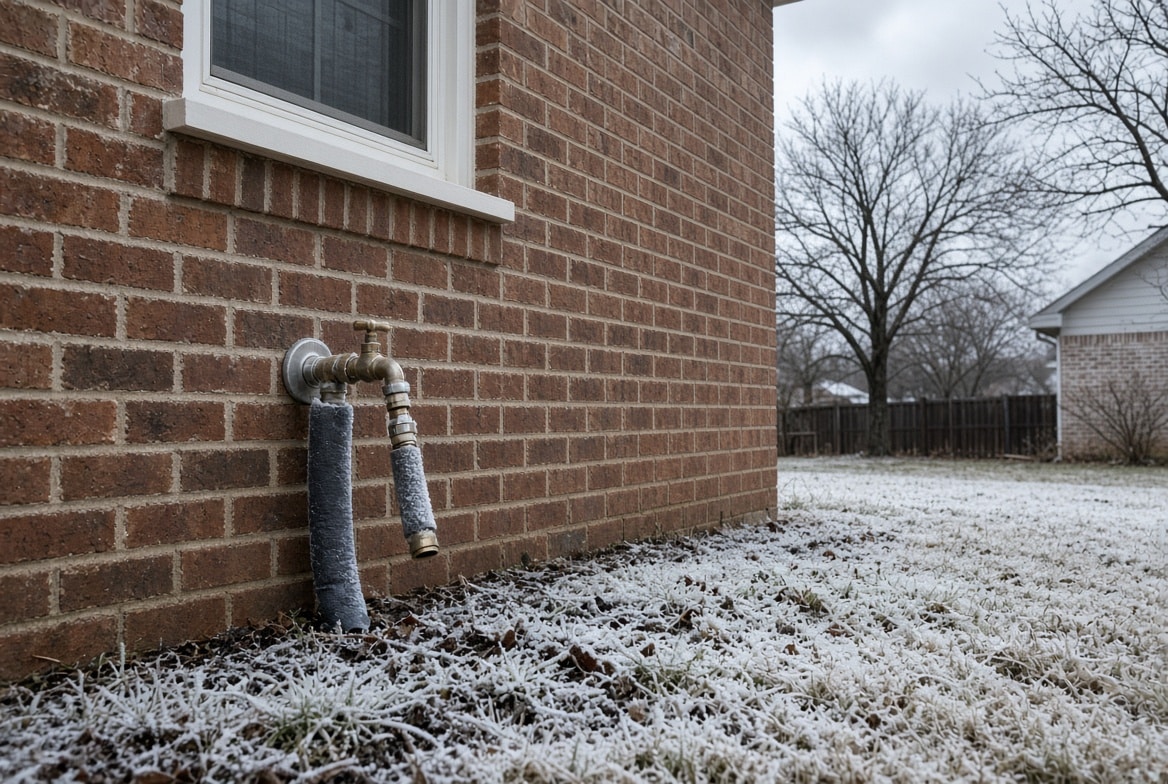
Insulate exposed pipes and outdoor faucets before the cold arrives, not during it. Disconnect garden hoses so trapped water cannot freeze back into the faucet. Know where the home’s main shutoff valve is and how to use it; minutes matter when a line lets go. For pier-and-beam homes, close crawl-space vents if the home is equipped with closable vents, and check that skirting is intact so cold air is not blowing across the lines. Keep the foundation watering routine paused while the ground is frozen, and resume the slow cycle once the soil has thawed and a dry spell sets in.
What should you check after the thaw?
Walk the house in the first days after temperatures recover. Look for damp spots on floors or at baseboards, listen for water running when nothing is on, and check the water meter: if every fixture is off and the meter is still moving, water is going somewhere. Watch the next water bill for a jump the household cannot explain. Inside, note any doors that newly stick or cracks that were not there in December, and give them a few weeks of normal weather before judging them; soil and finishes both need time to settle back. If the meter test or the bill points to a hidden leak, a hydrostatic plumbing test can confirm whether the lines under the slab are holding pressure before anyone blames the foundation.
When is it time to call?
Call when the signs point under the floor: a running meter with everything off, a sewer odor, warm or damp flooring, a water bill that does not fit, or movement signs that keep growing weeks after the freeze is over. Atlas Foundation Co. pairs foundation evaluation with licensed plumbing services, so the leak question and the foundation question get answered together instead of in sequence. In North Texas, where shifting clay already stresses buried lines every season, ruling the plumbing in or out is the fastest way to know what a freeze actually did to your home.
Key terms
Hydrostatic test: A plumbing test in which lines are isolated and filled or pressurized, then watched for a loss of water or pressure that shows a leak exists under the slab.
Crawl space: The shallow space beneath a pier-and-beam home, where support piers, beams, and plumbing lines sit exposed to outside air temperatures.
Frost heave: The lifting of soil when moisture in it freezes and expands. In North Texas it is shallow and brief, but it can add to uneven soil conditions near a foundation.
Frequently asked questions
Q: Can a freeze crack my slab foundation?
A: Directly, almost never in North Texas. The freeze depth is shallow and brief. The real risk is a pipe that freezes and splits, then leaks under the slab after the thaw and moves the soil the slab rests on.
Q: How do I know if a pipe burst under my slab?
A: Check the water meter with every fixture off; if it still moves, water is escaping somewhere. Other signs are a higher water bill, damp or warm spots on the floor, a sewer smell, and the sound of running water when the house is quiet.
Q: Should I keep watering my foundation during a freeze?
A: Pause while the ground is frozen. Resume a slow soaker-hose cycle, 12 to 18 inches from the slab, after the thaw if a dry spell follows, so soil moisture evens back out gradually.
A sensible next step
If a freeze has come and gone and the meter, the bill, or the floors are telling a story you cannot explain, Atlas Foundation Co. can provide a free foundation evaluation and test the plumbing as part of the same visit. Atlas has served North Texas since 1958 and can be reached at 817-478-1181.