
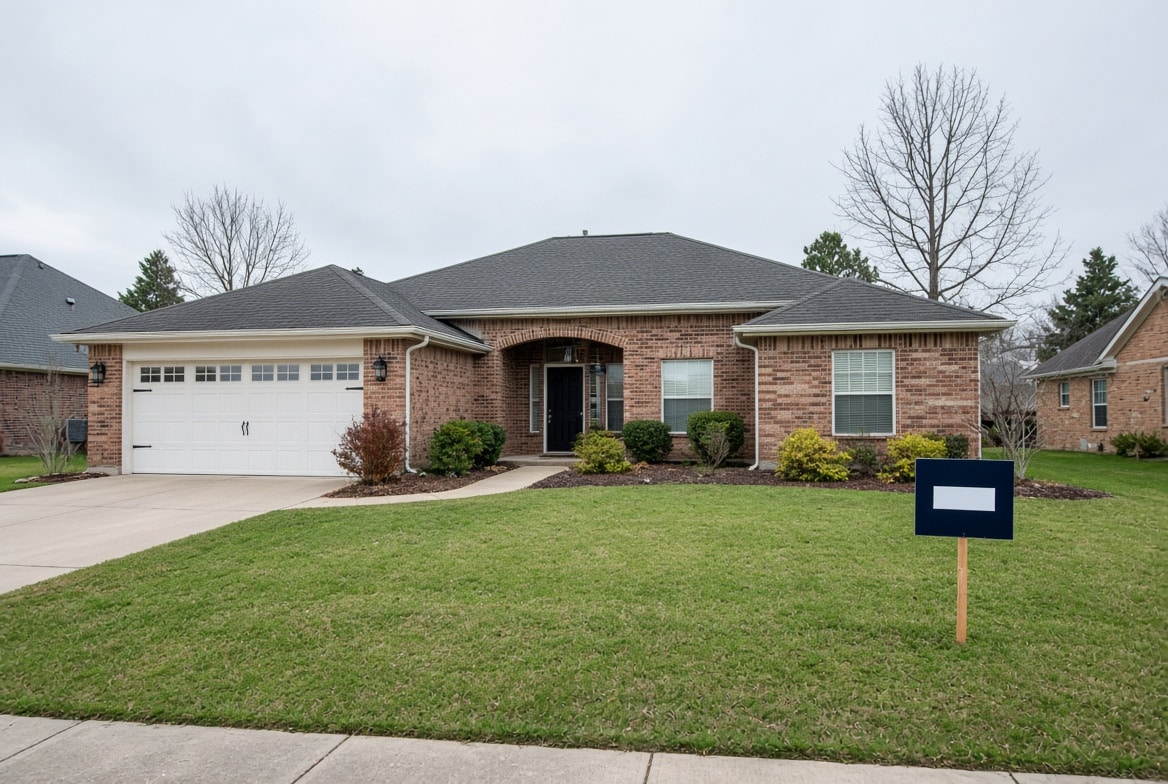


Selling a Home With Foundation Problems in Texas
January is when many North Texas homeowners quietly decide to sell in the spring, and it is the right month to deal with the foundation question while there is still time to choose. A home with foundation movement can be sold. What it cannot survive is a foundation surprise in the middle of a transaction, when a buyer’s inspector finds the cracks nobody documented and the deal slows down or falls apart. The homeowners who sell well with a foundation history share one trait: they got the facts, and the paperwork, before the listing went up.
What do you have to disclose in Texas?
Texas law requires most sellers to complete a Seller’s Disclosure Notice describing the condition of the property, and known foundation problems are exactly the kind of fact it exists for. A repaired foundation is not a secret to hide; it is a fact to document. A foundation that was evaluated, repaired, and warranted, with the records to prove it, reads to a buyer very differently from cracks with no explanation. Sellers should answer the disclosure honestly and completely, and let the documentation carry the reassurance. Guessing or minimizing is what creates disputes after closing.
Should you repair before listing, or sell as-is?
It depends on what an evaluation finds, and that is why the evaluation comes first. Some movement is cosmetic or stable, and a seller can price the home with the evaluation report on the table. Active movement is a harder sell as-is, because buyers and lenders both discount what they cannot size up, and they usually discount it by more than the repair would have cost. Repairing before listing, with a licensed structural engineer’s report before and after the work, converts an unknown into a finished item. Atlas Foundation Co. recommends exactly that sequence for homeowners planning to sell within the year, and handles the permit process as part of its foundation repair services.
Why does the warranty matter so much to a buyer?
Because it moves the risk. Atlas Foundation Co. backs its foundation repairs with a free lifetime warranty, and that warranty is transferable, so it passes to the next owner rather than expiring at the closing table. For a buyer comparing two homes with foundation histories, the one whose repair is warranted for the life of the home, by a company that has been in business since 1958, is simply the safer purchase. If your home was repaired years ago, January is the time to find the warranty paperwork and confirm it is in order, before a buyer’s questions make it urgent.
What documentation should you gather?
Build the packet before the first showing. It should include the foundation evaluation or engineer’s report, the repair contract and scope of work, elevation readings from before and after the repair if you have them, permit records, plumbing test results if lines under the slab were checked, and the warranty certificate. If the home has never been evaluated, start there; unexplained signs of foundation problems are harder to sell than explained ones. If a repair is needed, slab foundation repair or pier-and-beam work done in winter leaves the spring listing clean and the yard recovered.
When should the work happen?
Foundation repair is not a warm-weather-only trade, and winter scheduling has practical advantages. Crews are easier to book in January than in the spring rush, the yard has time to settle and green back up before listing photos, and the seller controls the timeline instead of negotiating against a closing date. A repair discovered in March and negotiated in April is a concession. The same repair finished in February, with papers in a folder, is a feature of the listing.
Key terms
Seller’s Disclosure Notice: The form Texas law requires most sellers to give buyers, describing known conditions of the property, including foundation problems the seller is aware of.
Transferable warranty: A repair warranty that passes from the seller to the buyer at closing, so the new owner holds the coverage for the work already done.
Elevation readings: Measurements of a floor’s heights across a home, taken to show how much a foundation has moved and whether a repair restored it.
Frequently asked questions
Q: Do I have to disclose a foundation repair that was done years ago?
A: Yes. Texas sellers must disclose known foundation problems and repairs on the Seller’s Disclosure Notice. A documented, warranted repair is a selling point; an undisclosed one is a liability.
Q: Will a foundation history scare off every buyer?
A: No. Buyers in North Texas know clay soil moves foundations. What scares buyers is uncertainty. An engineer’s report, a completed repair, and a transferable lifetime warranty answer the uncertainty directly.
Q: Is it better to repair or to lower the price?
A: Get the evaluation first. Buyers usually discount an unrepaired foundation by more than the repair costs, because they are pricing the unknown. A completed, documented repair often protects more of the sale price than it costs.
A sensible next step
If a spring sale is on your calendar, January is the month to know where your foundation stands. Atlas Foundation Co. offers a free foundation evaluation for North Texas homeowners, and can explain what documentation and warranty records a buyer will want to see. Call 817-478-1181 to schedule.