
home foundation issues Archives - Atlas Foundation
Atlas Foundation

Share this:

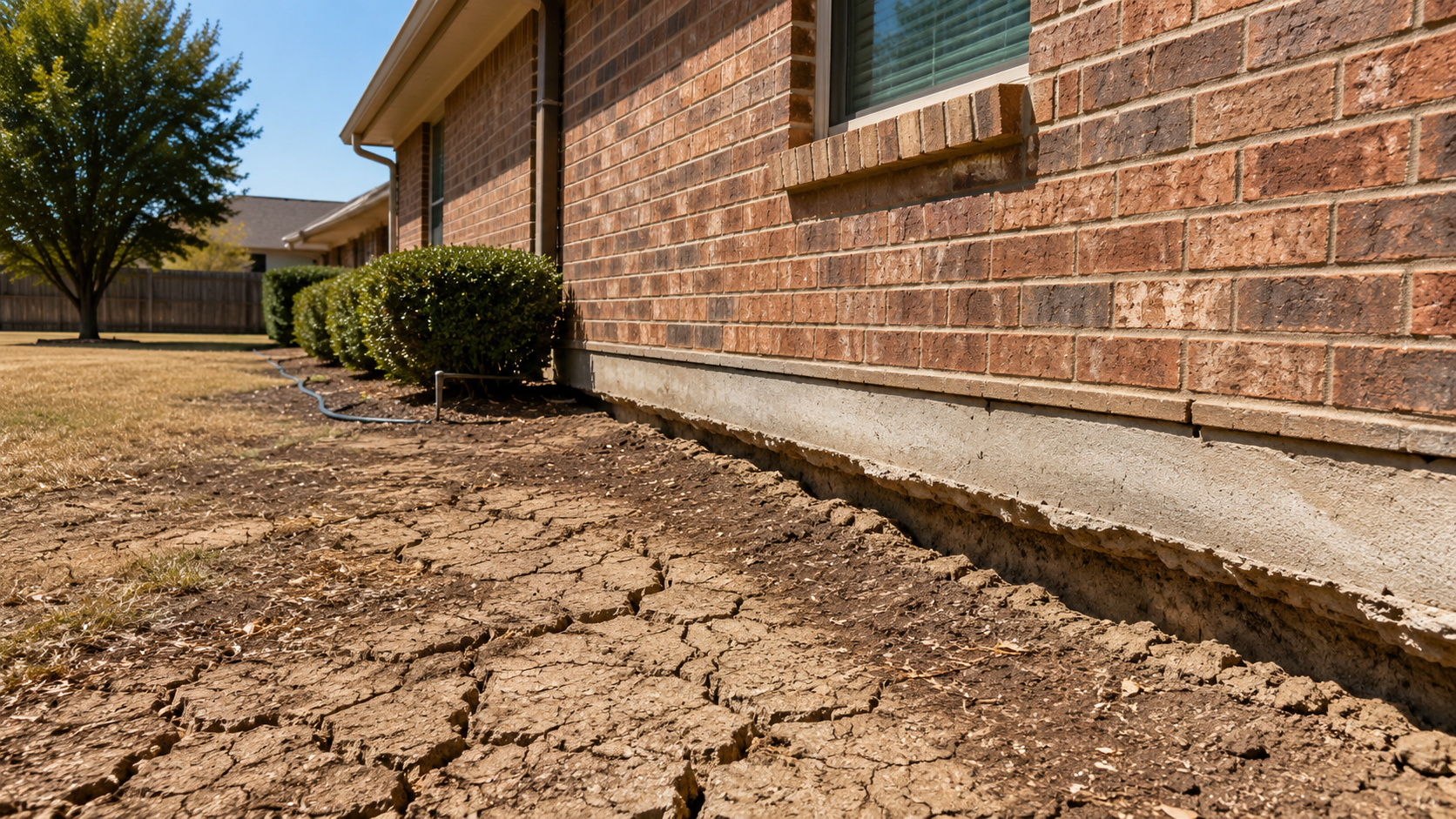
Why Is the Soil Pulling Away From My Foundation?

If you walk around your house during a North Texas summer and notice a gap between the soil and the edge of your foundation, it can look alarming. In many cases, though, the explanation is relatively straightforward: clay-rich soil has lost moisture, contracted, and physically pulled away from the slab.

That gap does not automatically mean your foundation is damaged. It does tell you that the moisture conditions around your home have changed, and because the same soil supports your foundation, it is worth paying attention to what happens next.

For some homeowners, the answer is better soil-moisture management. For others, the gap appears alongside sticking doors, masonry cracks, drywall cracks, uneven floors, or other signs that warrant a professional foundation evaluation. Knowing which situation you have is the important part.

Why Does Soil Pull Away From a Foundation?

Much of Dallas-Fort Worth has clay-rich soil, and clay changes volume as its moisture content changes. When it absorbs moisture, it expands. During prolonged hot and dry weather, it loses moisture and contracts.

That contraction can produce the familiar cracks you see across a dried-out yard, but it can also cause the soil immediately beside your home to pull away from the concrete foundation. Depending on shade, drainage, trees, landscaping, irrigation, and soil conditions, one side of the house may show considerably more separation than another.

The visible gap is therefore a symptom of changing soil conditions, not a diagnosis of foundation damage.

Does Soil Pulling Away Mean Your Foundation Is Damaged?

Not necessarily. Dry soil can shrink substantially without the foundation itself experiencing problematic movement.

What matters more is whether the house is showing other changes at the same time. Sticking doors, windows that suddenly become difficult to operate, new diagonal drywall cracks, widening brick or mortar cracks, separation around trim, and noticeable floor changes can make the situation more significant.

If all you see is dry, contracted soil, moisture management may be the logical place to start. If the house itself appears to be changing, guessing becomes less useful.

Atlas can evaluate the foundation and help determine whether you are looking at ordinary seasonal soil shrinkage or signs of actual foundation movement. If you are already seeing several structural symptoms, book a free Atlas foundation evaluation rather than assuming watering alone will solve the problem.

Why North Texas Soil Can Change So Dramatically

A North Texas summer can pull moisture from the ground for weeks or months. Heat increases evaporation while grass, landscaping, and mature trees continue drawing water through their root systems. Roof overhangs may keep rainfall from reaching the soil beside the house, while patios and driveways create completely different moisture conditions only a few feet away.

The result is rarely perfectly uniform. One portion of the soil supporting a home can remain relatively stable while another becomes considerably drier. That distinction matters because foundations are affected less by the simple fact that soil changes than by uneven soil conditions around different portions of the structure.

Keeping the surrounding soil reasonably consistent is one reason foundation watering is common in North Texas.

Should You Fill the Gap With Dirt?

It is tempting. There is a hole, so put dirt in the hole.

But if the original soil contracted because it lost moisture, adding more dry soil to the opening does not address why the gap appeared. When moisture eventually returns, the original clay can expand again.

The more useful question is whether the surrounding soil needs gradual moisture restoration. The same logic applies to water. You do not want to treat the visible crack as a channel that simply needs to be filled.

Should You Pour Water Directly Into the Gap?

No. Dumping water straight into the opening concentrates moisture against one narrow portion of the foundation instead of gradually conditioning the broader surrounding soil.

Foundation watering works better when moisture enters the soil slowly and consistently. The objective is penetration beneath the surface, not merely making the first inch of dirt look wet.

This distinction matters because a homeowner can spend ten minutes spraying dry dirt with a garden hose and walk away thinking the foundation has been watered. In reality, the surface may be wet while the soil beneath it remains extremely dry.

Can You Water the Foundation Yourself?

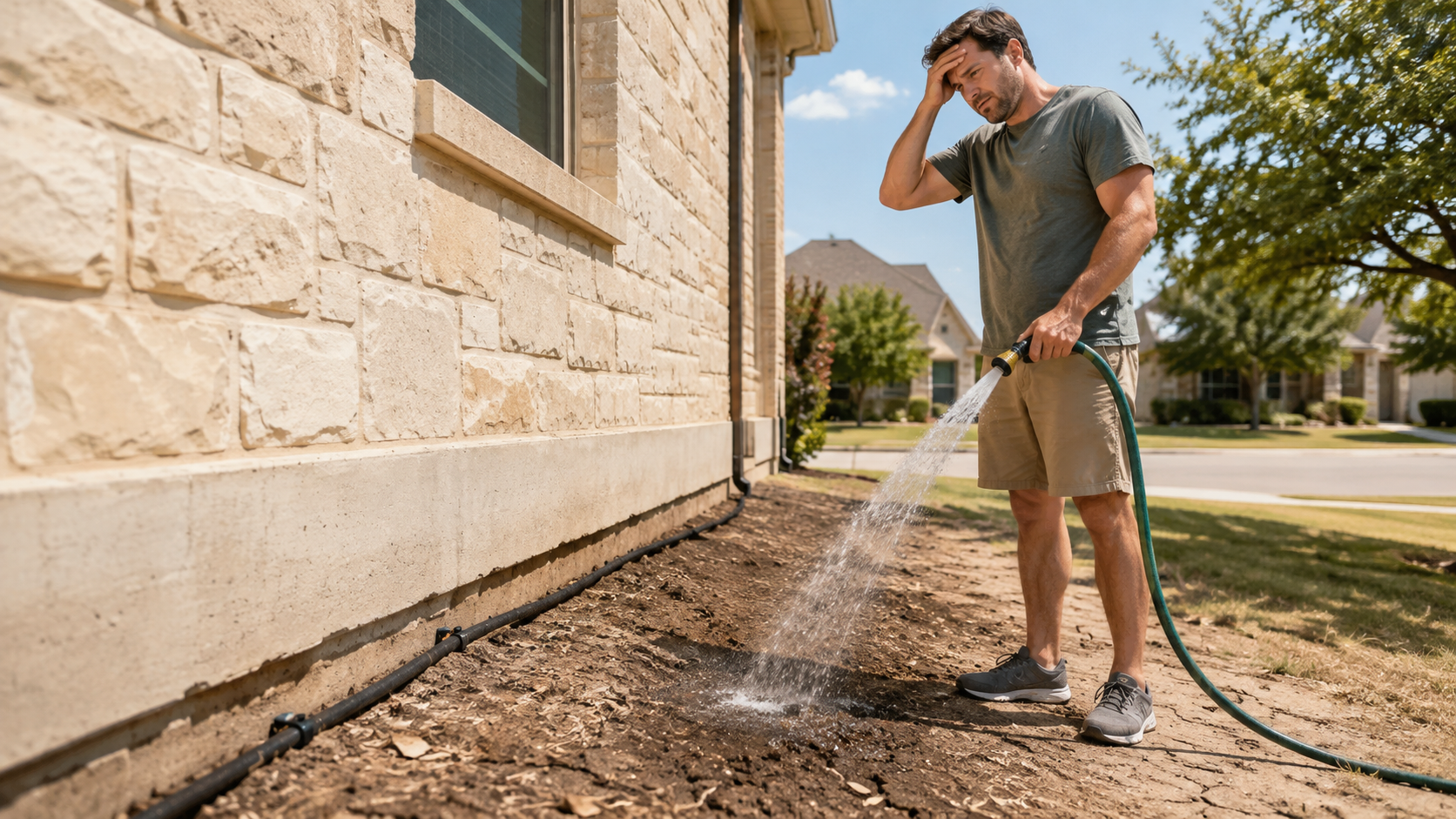
Yes. A homeowner can use a conventional garden hose or soaker hose to manage soil moisture around a foundation. The water should generally be applied to the soil beside the foundation rather than blasted directly against the concrete, and it should be applied slowly enough that it penetrates instead of immediately running away.

The difficult part is consistency. You have to work around the relevant perimeter, account for shaded and sunny areas, watch for runoff, respond to rainfall, avoid creating muddy sections, and make sure you are doing more than wetting the surface. If you are hand watering with a hose, that also means moving it repeatedly and giving each area enough time to absorb moisture.

It works.

It can also become a part-time job in hydrology.

Why Atlas Uses a Porous Foundation Watering System

Atlas offers a Foundation Watering Program designed to take much of that manual work out of the process.

Rather than relying on someone to stand outside moving a garden hose from section to section, a porous watering hose distributes water slowly along the foundation perimeter. Slow application gives water time to penetrate the surrounding soil instead of simply soaking the surface or running down the driveway.

During sufficiently hot and dry conditions, an Atlas watering system may operate for periods around two hours every two days, although the correct schedule depends on the property, soil, rainfall, drainage, landscaping, and other conditions. The important thing is not blindly following a timer. It is producing slow, reasonably even moisture around the foundation without turning the yard into a swamp.

If you are already looking at a widening band of dry soil around the house and thinking you would rather not spend your evenings relocating a garden hose, Atlas’s foundation watering program is designed for exactly that problem.

Will Watering Make the Gap Close?

It may. Dry clay can expand as moisture gradually returns, so the separation between the soil and foundation may become smaller.

That does not mean you should try to force the gap shut with a huge dose of water. Rapidly changing the moisture condition in one location is not the goal. Think in terms of maintaining the surrounding soil rather than repairing a visible crack in the dirt.

The gap is what you can see. The moisture condition is what you are actually managing.

Can You Overwater a Foundation?

Yes, which is another reason “just add water” is not much of a maintenance plan. Too much water can contribute to standing water, erosion, poor drainage, soggy landscaping, and highly uneven soil moisture.

If one side of the house receives substantially more water than another, you may simply be replacing one moisture imbalance with another. Good foundation watering is therefore neither drought nor deluge. The target is relatively consistent soil moisture appropriate for the property and weather conditions.

If water is repeatedly pooling near the house, running toward the foundation, or eroding soil around one section, the problem may involve drainage rather than watering. Atlas also provides drainage services to help manage how water moves around the property.

What If the Gap Is Only on One Side of the House?

That is worth investigating. One side may receive more afternoon sun, sit near large trees, receive less irrigation, or be protected from rainfall by a roof overhang. Another side may receive concentrated runoff from gutters or downspouts.

Walk the property and compare conditions rather than treating the house as though every side experiences the same environment. If one area is consistently much wetter or drier than another, that difference may explain why the soil is behaving differently there.

If drainage is contributing to the imbalance, correcting how water moves around the property may be more useful than simply adding more irrigation.

What If You Also Have Sticking Doors or Cracks?

That changes the conversation.

A gap in dry soil alone does not establish that your foundation needs repair. A soil gap combined with widening masonry cracks, several sticking doors, changing window openings, significant drywall cracks, or noticeable floor movement deserves closer attention.

Those are the circumstances where a professional evaluation becomes more useful than experimenting with additional water and hoping for the best. Atlas can inspect the foundation, look at the pattern of symptoms, and help determine whether the problem is seasonal soil contraction, drainage, moisture management, plumbing, or actual foundation movement.

You can also review Atlas’s guide to the signs of foundation problems before deciding whether an evaluation makes sense.

Could Plumbing Be Affecting the Soil?

Yes. A leak beneath or near a slab can introduce substantial moisture into soil that would otherwise be dry, creating very different conditions beneath one portion of the house compared with another.

Foundation movement can also place stress on plumbing, which is why foundation and plumbing symptoms occasionally appear together. If there is reason to suspect an under-slab plumbing problem, testing may be more appropriate than simply increasing foundation watering.

Atlas also provides plumbing services when the evidence points toward a leak or other under-slab issue. The goal is to identify the actual cause before spending money correcting the wrong problem.

What Should You Do If the Soil Is Pulling Away Right Now?

Start with a walk around the property. Compare the soil on different sides of the house, check gutters and downspouts, look for erosion or standing water, notice mature trees and landscaping, and see whether the ground is cracked or extremely hard.

Then inspect the house itself. If you are seeing dry soil but no meaningful structural symptoms, begin thinking about consistent foundation moisture management. You can do it manually if you are willing to devote the time to slow, even watering.

If you would rather have a system designed to distribute water gradually around the foundation, talk to Atlas about the Foundation Watering Program.

If the soil gap is accompanied by structural symptoms, skip the guessing and schedule a free foundation evaluation.

The Gap Is a Clue, Not a Diagnosis

Soil pulling away from a foundation is common during prolonged North Texas heat because clay contracts as it loses moisture. The gap can look dramatic while the foundation itself remains perfectly serviceable.

But it is still useful information. It tells you that the soil surrounding the home has become dry enough to change volume, and that is a good reason to look at moisture consistency, drainage, and the condition of the house itself.

If your problem is mainly dry soil, Atlas can help take foundation watering off your personal chore list with a system designed for slow, consistent moisture delivery. If you are seeing cracks, sticking doors, uneven floors, or other signs of movement, Atlas can evaluate the foundation and help determine whether something more significant is happening.

Dry soil and tired of hand watering? Learn more about the Atlas Foundation Watering Program.

Seeing cracks, sticking doors, uneven floors, or other movement? Book a free Atlas foundation evaluation.

Soil and Foundation FAQs

Why is the dirt pulling away from my foundation?

During hot, dry weather, North Texas clay soil can lose moisture and contract. As it shrinks, a visible gap can develop between the soil and foundation.

Does soil pulling away mean my foundation is damaged?

No. A soil gap by itself does not prove foundation damage. It becomes more significant when accompanied by structural symptoms such as sticking doors, worsening cracks, difficult windows, or noticeable floor changes.

Should I fill the gap between the soil and foundation with dirt?

Usually not as the first response. If soil contraction caused the opening, adding dirt does not correct the underlying moisture condition.

Should I pour water directly into the gap?

No. Water the surrounding soil gradually rather than dumping water directly into the opening.

Can I water my foundation myself?

Yes. DIY watering can work if water is applied slowly, evenly, and consistently around the relevant perimeter. The challenge is providing enough time for deeper penetration and maintaining the routine as weather conditions change.

Is a foundation watering system easier than hand watering?

For many homeowners, yes. A porous watering system can distribute water slowly around a larger portion of the foundation without requiring someone to continually move a garden hose.

Can foundation watering repair existing foundation damage?

No. Foundation watering is soil-moisture management. Existing structural movement should be evaluated separately.

When should I call Atlas?

If the main issue is dry soil and inconsistent moisture, contact Atlas about the Foundation Watering Program. If the soil separation appears alongside cracking, sticking doors, uneven floors, or other structural symptoms, schedule a free foundation evaluation so the underlying cause can be identified.
Share this:

DIY Foundation Watering: Yes, You Can Do It by Hand. Here’s Why You May Not Want To.

If the soil around your North Texas home is cracking, shrinking, or pulling away from the foundation, reaching for the garden hose is a reasonable first thought. And yes, you can water the soil around a foundation by hand.

The catch is that proper foundation watering is not the same as spraying the flower beds or making the top inch of dirt look damp. The goal is to maintain reasonably consistent moisture in the soil surrounding the foundation, which means applying water slowly enough and long enough for it to penetrate rather than simply running across the surface.

Doing that yourself is entirely possible. Doing it consistently around an entire house through a North Texas summer is where the garden hose begins negotiating for overtime.

If you would rather automate much of that work, Atlas offers a Foundation Watering Program designed to distribute water slowly and consistently around the foundation perimeter.

Does Soil Pulling Away From the Foundation Mean You Have Foundation Damage?

Not necessarily. During prolonged hot and dry weather, clay-rich soil can lose moisture, shrink, and pull away from the edge of a foundation. The resulting gap may look dramatic without proving that the foundation itself has failed.

What the gap does tell you is that the surrounding soil has become dry enough to contract. Because clay can expand as it absorbs moisture and contract as it dries, large swings in moisture conditions can change the soil supporting different portions of the house.

Foundation watering is therefore a moisture-management strategy, not a structural repair. If the house is already showing significant cracks, multiple sticking doors, uneven floors, separated trim, or other signs of movement, adding more water should not substitute for determining what is actually happening.

If those symptoms are already present, schedule a free Atlas foundation evaluation before assuming the solution is simply more watering.

Can You Water a Foundation With a Normal Garden Hose?

Yes. You do not need specialized equipment to begin managing soil moisture around a foundation.

The important distinction is that you are watering the soil, not the concrete. Holding a hose against the side of the house for five minutes may make the ground look wet, but surface moisture tells you very little about what is happening several inches below.

North Texas soil can darken almost immediately when water hits it while remaining extremely dry underneath. Effective foundation watering requires slow application and enough time for moisture to work into the soil.

That is simple in principle.

It becomes considerably less simple when you have to do it around the whole house.

How Do You DIY Foundation Watering?

Water the Soil Beside the Foundation, Not the Concrete

Apply water to the soil near the foundation rather than blasting the slab or foundation wall directly. A common starting point is roughly 12 to 24 inches away from the foundation, although landscaping, drainage, patios, slopes, soil conditions, and the particular house can affect placement.

Avoid high-pressure spraying. The objective is to introduce moisture into the surrounding soil, not erode it, wash it away, or create standing water immediately beside the structure.

Use a Slow Flow

Foundation watering works best when water enters the soil gradually. A gentle hose flow, slow trickle, porous hose, or soaker-style hose gives the ground time to absorb moisture instead of sending most of the water down the driveway.

If you turn on the hose and immediately see water racing across the yard, you are mostly watering the storm drain.

Slow it down.

Give the Water Time to Penetrate

This is where DIY foundation watering starts becoming inconvenient. You cannot walk around the house spraying every section for thirty seconds and expect meaningful moisture penetration.

With one ordinary hose, you may need to position it along one section of the house, give that area time to absorb water, move the hose farther along the perimeter, wait again, and continue until you have covered the relevant portions of the foundation.

Then you have to do it again when conditions call for another watering.

The actual technique is not particularly difficult. The commitment is remembering the routine and repeating it consistently enough for it to matter.

Water Around the Perimeter as Evenly as Practical

Watering one side heavily while another remains extremely dry defeats much of the purpose. Soil conditions will never be perfectly uniform, but foundation watering is intended to reduce unnecessary extremes.

That means paying attention to areas receiving full afternoon sun, shaded areas, roof overhangs, landscaping, mature trees, slopes, driveways, patios, drainage patterns, and sections of soil that dry noticeably faster than others.

At this point, your simple garden-hose project has become a small irrigation-management program.

This is exactly the job a dedicated Atlas foundation watering system is designed to make easier.

How Often Should You Water Your Foundation in Texas?

There is no universal schedule that works for every North Texas property. Temperature, rainfall, soil composition, shade, drainage, landscaping, water flow, and the home itself all affect how quickly surrounding soil dries.

During prolonged hot and dry periods, foundation watering may be needed several times per week. Atlas uses a slow-saturation approach with porous watering hose, and under sufficiently dry conditions watering periods may run around two hours every two days. That should not be treated as a universal prescription for every home.

The principle matters more than blindly copying a timer: slow, regular moisture penetration is more useful than occasionally soaking the surface.

Rainfall also matters. If North Texas receives substantial rain, watering should be reduced or stopped accordingly. The objective is reasonably consistent moisture, not maximum moisture and certainly not a swamp.

Why Doesn’t Simply Spraying Dry Soil Work?

Because wet-looking dirt and adequately moistened soil are not the same thing.

Water can make sun-baked soil turn dark within seconds. That does not mean the moisture has penetrated deeply enough to affect the larger body of soil surrounding the foundation. A short burst from the hose can produce a wonderfully convincing visual result while accomplishing very little below the surface.

Slow-delivery methods such as porous hose help because water is released gradually along a larger area, giving it more opportunity to soak downward rather than immediately becoming runoff.

Foundation watering is about what is happening inside the soil, not what the dirt looks like from the patio.

How Can You Tell Whether Water Is Penetrating the Soil?

A simple homeowner check is to use a long screwdriver or similar probe after watering. Push it into the soil near the watered area. Extremely hard soil that resists penetration may still be quite dry, while soil that allows easier penetration without becoming muddy suggests that moisture has reached farther beneath the surface.

This is not an engineering test or a substitute for a professional assessment. It is simply a practical reminder that the appearance of the surface does not tell the whole story.

If you are repeatedly watering but the soil remains extremely hard, cracks continue developing, or one portion of the property behaves very differently from another, there may be more going on than your watering routine can address.

Should You Pour Water Into the Gap Between the Soil and Foundation?

No. If dry clay has contracted and created a visible opening beside the foundation, resist the temptation to put the hose into the gap and fill it like a trench.

The goal is to restore moisture gradually to the surrounding soil, not concentrate a large amount of water in one narrow opening. Watering the broader soil area slowly encourages more consistent moisture conditions and reduces the likelihood of simply creating a wet pocket beside otherwise dry ground.

The gap is a symptom of dry soil. It is not a tiny reservoir waiting to be filled.

Can You Overwater Around a Foundation?

Yes. More water is not automatically better.

Excessive watering can create muddy soil, runoff, erosion, standing water, poor drainage conditions, and large differences in moisture between different portions of the property. If water repeatedly collects beside one side of the house, the solution may involve drainage rather than more foundation watering.

Atlas also provides foundation drainage services for properties where runoff, grading, downspouts, or standing water are contributing to uneven moisture conditions around the home.

The goal of foundation watering is consistency. You are trying to avoid extremes in either direction.

Is DIY Foundation Watering Cheaper?

Almost certainly.

If you already own a garden hose, the equipment cost can be close to zero. What you are spending instead is time.

You need to remember the watering schedule, position the hose, wait for the soil to absorb moisture, move the hose, wait again, work your way around the house, compensate for areas that dry faster, account for rainfall, and repeat the process throughout prolonged hot and dry weather.

You have saved money.

You have also acquired a part-time job in hydrology.

For someone who enjoys working around the yard and is willing to maintain the routine, that may be perfectly acceptable. For everyone else, convenience becomes part of the calculation.

Why Use a Porous Foundation Watering System?

A porous foundation watering system distributes water slowly along a much larger portion of the foundation perimeter at the same time. Instead of saturating one small patch, moving a hose, waiting, and repeating the process, the system can deliver moisture gradually across many feet of surrounding soil.

That addresses the three biggest frustrations with hand watering: consistency, penetration, and time.

Slow watering gives the soil more time to absorb moisture. More of the perimeter can receive water at approximately the same time. And the homeowner does not need to spend an evening relocating a garden hose every few minutes.

A watering routine only helps if somebody actually keeps doing it.

Atlas’s Foundation Watering Program is intended for homeowners who want the benefits of more consistent soil-moisture management without personally supervising every watering cycle.

Does Foundation Watering Prevent Foundation Problems?

Foundation watering should not be treated as a guarantee against foundation movement. Many factors influence a foundation, including soil conditions, drainage, tree roots, plumbing leaks, construction, grading, drought, rainfall, and previous structural movement.

Watering is one tool for managing the soil environment around the foundation. It cannot repair structural damage that already exists.

That distinction is important because the homeowner who sees nothing more than dry, shrinking soil is in a different situation from the homeowner who has three sticking doors, widening masonry cracks, diagonal drywall cracks, and an increasingly uneven floor.

The first homeowner may need better moisture management.

The second homeowner needs to know whether the foundation is moving.

If your home is already showing several signs of foundation problems, book a free Atlas foundation evaluation rather than trying to solve structural symptoms with a garden hose.

So Should You DIY Your Foundation Watering?

You can.

If you enjoy yard maintenance, have the time to monitor conditions, remember the schedule, and are willing to work around the entire home, manual foundation watering can be perfectly practical. Water slowly, focus on the surrounding soil rather than the concrete, give moisture time to penetrate, distribute it as evenly as practical, and adjust for rainfall.

The complication is not understanding those instructions.

It is still doing them several weeks later.

If you would rather turn on a system that distributes water gradually along the foundation perimeter, talk to Atlas about a foundation watering system.

If you are already seeing cracks, sticking doors, uneven floors, or several signs of structural movement, skip the experiment and schedule a free foundation evaluation.

Let Atlas Handle the Boring Part

Foundation watering is one of those home-maintenance jobs that is easy to understand and remarkably easy to stop doing. The hose has to be moved, the weather changes, you miss a few days, then life happens and suddenly you are once again standing outside trying to remember which side of the house you watered last Tuesday.

A professionally installed porous watering system takes much of that routine work out of your hands by delivering water slowly along the foundation perimeter. You still need to respond sensibly to rainfall and changing conditions, but you no longer have to personally patrol several hundred feet of dirt.

Want easier foundation moisture management? Learn about the Atlas Foundation Watering Program.

Already seeing cracks, sticking doors, uneven floors, or other movement? Book a free Atlas foundation evaluation.

You absolutely can DIY foundation watering.

The better question is whether you want the job.

Foundation Watering FAQs

How far from the foundation should I water?

A common starting point is roughly 12 to 24 inches from the foundation rather than spraying directly against the concrete. The appropriate placement can vary with landscaping, drainage, patios, soil conditions, and the property itself.

How long should I water my foundation?

The required duration depends on soil conditions, weather, water flow, and the watering method. Atlas systems may use slow watering periods around two hours every two days during sufficiently hot and dry conditions, but the correct schedule varies by property.

Is soil pulling away from my foundation a sign of foundation damage?

Not necessarily. Dry clay soil can shrink away from a foundation without proving structural damage. The gap does indicate that the surrounding soil has become very dry.

Should I pour water directly into the gap?

No. Restore moisture gradually to the broader surrounding soil rather than flooding the narrow opening beside the foundation.

Can I use a garden hose to water my foundation?

Yes. Apply water slowly and work around the perimeter as evenly as practical. The main disadvantage is the time required to achieve reasonably consistent moisture manually.

Is a porous or soaker hose better than hand watering?

It is generally more convenient because it can distribute water slowly along a larger section of the foundation at one time rather than requiring repeated hose repositioning.

Can foundation watering fix existing foundation damage?

No. Foundation watering manages soil moisture. Existing structural movement should be evaluated separately.

When should I call Atlas?

If the primary issue is dry soil and maintaining more consistent moisture, contact Atlas about the Foundation Watering Program. If you are seeing multiple cracks, sticking doors, uneven floors, or other structural symptoms, schedule a free foundation evaluation.

Share this:

Foundation Drainage Tips for the DFW Rainy Season

While Dallas–Fort Worth summers are known for heat and drought, they also bring surprise downpours and heavy thunderstorms. Sudden rainfall after long dry periods can be just as damaging to your foundation as dehydration—and sometimes even worse.

That’s why a smart drainage strategy is one of the most important steps you can take to protect your home. At Atlas Foundation, we’ve seen how poor drainage turns minor issues into major structural repairs. Here’s how to ensure your home is prepared for the next summer storm.

Why Drainage Matters

Your foundation relies on stable soil for support. When water pools near your home, it can:

  • Erode supporting soil under slabs or piers
  • Cause one section of the foundation to heave or sink
  • Create pressure against basement or crawl space walls
  • Lead to mold, mildew, and wood rot in pier and beam systems

In short, uncontrolled runoff is a recipe for structural instability.

Signs You Have a Drainage Problem

  • Pooling water near the home after rain
  • Splash marks or erosion under downspouts
  • Mildew or damp smells in crawl spaces
  • Water seeping through foundation cracks
  • Soggy areas in your yard that never dry out

If you’re seeing any of these red flags, it’s time to inspect your drainage system.

5 Foundation Drainage Tips for Summer in DFW

1. Extend Your Downspouts

Make sure downspouts extend at least 3–5 feet away from your foundation. Consider flexible extenders or splash blocks for easy fixes.

2. Grade Your Yard Correctly

Soil should slope away from your house, not toward it. Add soil or regrade low areas to redirect runoff naturally.

3. Install or Maintain French Drains

French drains collect and redirect groundwater away from vulnerable areas. They’re ideal for flat yards or homes with repeated water intrusion.

4. Keep Gutters Clean

Clogged gutters cause overflow, which pours directly against your foundation. Clean them every season—or more often if you have overhanging trees.

5. Check Crawl Spaces and Pier and Beam Foundations

Pier and beam homes are especially vulnerable. Water buildup under the house can cause rot, mold, and settlement. Make sure ventilation is adequate and that there are no standing puddles.

Why Atlas Foundation?

Our drainage specialists understand the unique storm patterns and clay soil behavior of North Texas. Whether you need an evaluation, a French drain system, or a full foundation repair, Atlas Foundation provides honest advice and long-term solutions that work.

We don’t just fix problems—we help prevent them.


FAQ

Q: How do I know if I need a French drain?
A: If water pools near your home or you have recurring damp areas, a French drain can help redirect moisture away.

Q: Can poor drainage cause cracks in my foundation?
A: Yes. Water softens and shifts soil, which destabilizes your foundation over time.

Q: Do all homes need drainage systems?
A: Every home needs proper runoff control—even a simple downspout extension can make a big difference.

Q: Do you install French drains?
A: Yes. Atlas Foundation offers professional drainage solutions tailored to your property’s needs.


Glossary

French Drain – A trench filled with gravel and pipe that collects and redirects water away from structures.
Heaving – When foundation rises unevenly due to soil expansion from water.
Splash Block – A concrete or plastic device placed under downspouts to deflect water away.
Grading – Adjusting the slope of soil to direct water flow.
Pier and Beam Foundation – A foundation system elevated off the ground, sensitive to standing water and humidity.

Share this:

Concrete Leveling in the Summer: What You Need to Know

As summer heats up in North Texas, one foundation issue rises to the surface—literally: unlevel concrete. From driveways and patios to sidewalks and garage floors, concrete slabs across Dallas–Fort Worth are particularly vulnerable during hot, dry months.

That’s because soil movement doesn’t just affect your home’s foundation—it also shifts the slabs that support everything else. The result? Trip hazards, poor drainage, and even damage to your home’s structure if left unchecked.

Fortunately, Atlas Foundation offers advanced concrete leveling solutions that restore safety, function, and appearance with minimal disruption.

What Causes Concrete to Sink or Settle?

Uneven concrete is often caused by one of three things:

  1. Soil Erosion – Water runoff from rain or improper drainage washes away the soil beneath your slab.
  2. Soil Shrinkage – In summer, the clay-heavy soil in DFW contracts as it dries, leaving voids under concrete.
  3. Poor Compaction – When soil wasn’t compacted properly during initial construction, it eventually compresses under the weight of the slab.

All three are made worse by heat and drought—which is why leveling is a hot topic in summer.

Signs You Need Concrete Leveling

  • Cracks in driveways, sidewalks, or patios
  • Pooling water around your slab or uneven drainage
  • Tripping hazards from raised or sunken areas
  • Garage or porch slabs pulling away from the foundation

These aren’t just cosmetic issues—they can lead to water intrusion, pest entry points, or even foundation stress if adjacent to the home.

What Is Concrete Leveling?

Concrete leveling (also called slabjacking or mudjacking) is a process where a lifting compound is injected under the slab to raise it back to its original height. Atlas Foundation offers polyurethane foam injection, a faster, cleaner, and longer-lasting method than traditional mudjacking.

Benefits include:

  • Minimal downtime—most jobs completed in a day
  • No need to tear out or repour concrete
  • Sealed cracks and stabilized surfaces
  • Safe for patios, pool decks, sidewalks, and more

Why Summer Is a Smart Time for Leveling

Dry soil creates the ideal conditions for identifying and correcting sunken concrete. Plus, summer is peak season for outdoor use—so it’s smart to address uneven surfaces before your next barbecue, family gathering, or pool party.

Why Choose Atlas Foundation for Leveling?

Our concrete leveling solutions are designed with the Texas climate in mind. We use industry-leading materials that resist future moisture infiltration, ensuring a stable lift that lasts. Our crews are local, experienced, and committed to honest service—no upsells, no fluff.

Whether it’s a sunken driveway or an uneven patio, we can help you make it safe and seamless again.


FAQ

Q: Is concrete leveling cheaper than replacement?
A: Yes—often by 50% or more. Leveling avoids demolition, haul-off, and long cure times.

Q: How long does foam leveling last?
A: Polyurethane foam is extremely durable and resists water infiltration. It typically lasts for decades.

Q: Can I walk or drive on the surface right away?
A: Most surfaces are ready for use within hours after the job is complete.

Q: Will you seal cracks too?
A: Yes. We’ll seal existing cracks to prevent future water entry and protect your slab.


Glossary

Concrete Leveling – The process of lifting a sunken slab back to its original position using injected material.
Polyurethane Foam – A high-strength, fast-expanding compound used for concrete lifting and void filling.
Mudjacking – An older leveling method that uses a cement-based slurry to raise slabs.
Trip Hazard – A raised or sunken section of concrete that poses a safety risk.
Slabjacking – Another term for concrete leveling; especially when applied to outdoor flatwork.

Share this:

How to Spot Foundation Problems Before They Become Costly Repairs

In North Texas, foundation problems can sneak up on homeowners—especially during the transition from spring to summer. What starts as a hairline crack in the drywall or a window that sticks a little too often can quickly become a major (and expensive) repair. The good news? You don’t need to be a foundation expert to catch the warning signs early.

Knowing what to look for and taking action quickly can help you avoid structural damage, water intrusion, or worse. At Atlas Foundation, we’ve been helping DFW homeowners detect and address foundation issues for over 65 years. Here’s how to identify subtle red flags before they turn into big repair bills.

1. Monitor Cracks—Inside and Out

Cracks can tell you a lot about what’s going on beneath your home. Start by inspecting:

  • Interior drywall, especially near windows, doors, and corners
  • Brick or stone exteriors, looking for stair-step or diagonal patterns
  • Flooring and tile grout, especially in bathrooms and kitchens

Pro tip: Vertical cracks are usually cosmetic. Diagonal or stair-step cracks often point to movement.

2. Pay Attention to Doors and Windows

If a door that used to swing freely now rubs, sticks, or won’t latch, that could be a sign your home is shifting. Windows that don’t open or close like they used to—or have large gaps between the frame and wall—are also a red flag.

3. Use the “Ball Test” for Uneven Floors

Place a tennis ball or marble on the floor and see if it rolls. Sloping floors are often one of the first indicators of foundation settlement. This can happen gradually over time or more suddenly during hot, dry weather.

4. Inspect Trim and Moldings

Crown molding separating from the ceiling? Baseboards pulling away from the wall? These subtle signs may indicate structural movement below.

5. Watch for Soil Gaps Outside

Walk the perimeter of your home. If you notice the soil pulling away from the foundation, it could mean the ground is drying out—especially common in DFW’s clay-heavy soil. When soil loses moisture, it contracts and stops supporting the slab.

6. Listen to Creaks and Pops

While some creaking is normal in a home, a sudden increase in popping or groaning noises—especially at night as temperatures drop—can indicate new structural stress points.

When to Call in the Pros

If you’ve noticed two or more of these symptoms, it’s time to bring in an expert. Atlas Foundation offers free, no-pressure evaluations across Dallas–Fort Worth. We’ll walk your property, inspect the interior and exterior, and explain what we see in clear, jargon-free terms.

You’ll never get a pushy sales pitch—just honest advice from professionals who’ve seen it all.

Why Early Detection Matters

Small repairs are always less expensive than major structural corrections. And with foundation issues, time isn’t on your side. The longer your home sits unevenly, the more stress is placed on walls, plumbing, and the roof structure above.

By identifying and addressing issues early, you save money and preserve the integrity of your home.


FAQ

Q: How often should I inspect my home for foundation issues?
A: We recommend doing a walk-through inside and out every season—especially in spring and summer.

Q: Are all cracks a sign of foundation trouble?
A: No. Some are cosmetic, but diagonal or widening cracks often indicate movement.

Q: Is an inspection from Atlas Foundation really free?
A: Yes. Our inspections are completely free, with no strings attached.

Q: What if I’m not sure what I’m seeing is a problem?
A: That’s exactly why we’re here. We can tell you whether it’s something to monitor or something to fix.


Glossary

Settlement – The natural or uneven sinking of a home’s foundation over time.
Differential Movement – When parts of the foundation move differently from others, causing stress and cracking.
Stair-Step Crack – A zigzag crack pattern along mortar lines in brickwork, often a sign of foundation shift.
Crown Molding Separation – A gap forming between molding and ceiling due to structural movement.
Load-Bearing Wall – A wall that supports weight from above; often affected during foundation shifts.

Share this:

The Dangers of Dry Soil Around Your Foundation

When the Texas sun beats down for days or even weeks with little to no rain, it’s not just your lawn that suffers—it’s your foundation. Dry soil is one of the leading causes of foundation damage across North Texas, and many homeowners don’t even realize it until it’s too late. In areas like Dallas, Fort Worth, and surrounding communities, expansive clay soil reacts dramatically to changes in moisture. And when that soil dries out, it pulls away from your foundation, creating pockets of unsupported space beneath your home.

Over time, this lack of support can cause your foundation to crack, settle unevenly, or shift entirely. At Atlas Foundation, we see this issue escalate every summer. Fortunately, with a little education and the right prevention steps, you can protect your home before irreversible damage sets in.

Why Does Soil Drying Cause Foundation Problems?

Clay-rich soil is common in DFW. This type of soil expands when it absorbs moisture and shrinks when it dries out. When hot, dry weather hits, the soil shrinks and separates from your foundation. That shrinking isn’t uniform—some areas may lose more moisture than others, creating an unbalanced support system. This results in differential settlement—one of the primary causes of foundation stress and damage.

It’s not uncommon for homeowners to notice small warning signs during spring and early summer—cracks forming, gaps widening, or floors feeling uneven. These signs almost always correspond to soil drying out and changing shape.

Warning Signs Your Soil Is Too Dry

Here’s what to watch for:

  • Gaps between the soil and your home’s slab or pier and beam skirting
  • Large cracks in driveways or sidewalks near the home
  • Dry, powdery soil that pulls back from the perimeter
  • Interior cracks in drywall or tile that weren’t there in spring
  • Uneven flooring or doors that suddenly stick

How to Protect Your Foundation

Prevention is key. Here’s how to protect your home from dry soil damage:

  1. Start a Foundation Watering Program – Use soaker hoses around the perimeter to keep soil moisture consistent.
  2. Mulch Landscaping Beds – This helps retain moisture and protects root systems from stealing water from the soil near your foundation.
  3. Avoid Over-Irrigating Lawn Areas – Focus on deep, controlled watering near the home—not random sprinkler saturation.
  4. Maintain Grading – Ensure the soil slopes gently away from the house to prevent sudden water intrusion when rain finally arrives.
  5. Schedule Seasonal Inspections – Have a professional evaluate your foundation each spring or early summer to track soil movement.

Why Atlas Foundation?

We know the unique behavior of Texas soil and how it affects foundations in both slab and pier-and-beam homes. Atlas Foundation has served DFW homeowners for over 65 years. Our free inspections provide clear insight into your foundation’s condition—and we won’t recommend repairs unless they’re truly needed.

If you see gaps forming or cracks spreading, don’t wait. Let our experts assess your soil conditions and foundation stability so you can enjoy peace of mind through the heat.


FAQ

Q: Is dry soil really more dangerous than wet soil?
A: Yes. Rapid drying causes soil shrinkage, which leads to loss of support. Over time, this is more damaging than short-term moisture.

Q: Can’t I just water my lawn more to fix it?
A: Lawn watering is not the same as targeted foundation watering. Soaker hoses and consistent perimeter moisture are more effective.

Q: How fast does soil dry out in Texas summers?
A: Very fast. Depending on the week, moisture loss can occur in just days, especially with wind and sun exposure.

Q: What’s the best time of day to water?
A: Early morning or evening when evaporation is lowest.


Glossary

Clay Soil – Soil with a high clay content that expands when wet and contracts when dry.

Soil Separation – The visible gap between your foundation and the surrounding earth caused by dryness.

Differential Settlement – Uneven sinking or shifting of a foundation due to inconsistent soil support.

Foundation Skirt – The area where a pier and beam foundation meets the ground, often vulnerable to soil shrinkage.Perimeter Hydration – A targeted watering method to stabilize soil around a home’s foundation.

Share this:

Your Summer Foundation Checklist for North Texas Homeowners

As temperatures soar and the rain becomes scarce, summer in Dallas–Fort Worth can be tough on your foundation. But with a little foresight, you can catch small issues before they turn into costly structural problems. Whether your home rests on a concrete slab or a pier-and-beam system, this checklist will help you safeguard your foundation through the heat.

At Atlas Foundation, we believe proactive maintenance is key to long-term foundation health. That’s why we created this seasonal checklist specifically for homes in North Texas—where heat, clay soil, and shifting moisture levels demand extra care.

1. Inspect for New Cracks

Walk the perimeter of your home. Look for any new or widening cracks in the brickwork, especially stair-step cracks or diagonal lines near windows and doors. Inside, check drywall and tile grout for similar signs. Cracks are often your foundation’s first cry for help.

2. Check Doors and Windows

Are your doors rubbing or sticking? Are your windows suddenly hard to open? These are signs of shifting frames—often caused by foundation movement. Make note of anything that feels “off” compared to the spring.

3. Monitor Soil Separation

Look down. Is the soil pulling away from your foundation? A gap between the dirt and your home’s perimeter is a telltale sign the ground is drying and shrinking. This is especially common in Texas summers and signals the need for a watering program.

4. Confirm Drainage is Working

Make sure your gutters are clear and your downspouts are directing water away from your foundation. Pooling water from summer thunderstorms can be just as damaging as drought. French drains or splash blocks may help.

5. Maintain Your Watering Program

If you started a foundation hydration routine in spring, keep it going. Use soaker hoses or drip lines 8–18 inches from your home’s edge. The soil should remain consistently moist—not muddy.

6. Trim Trees and Large Plants

Roots compete for moisture and can shift the soil. Prune branches and consider root barriers for any large trees near the house.

7. Evaluate Your Foundation for Sinking or Lifting

Use a level or marble test on your interior floors. If they feel like they’re tilting or if furniture seems to lean, you may be experiencing uneven settlement. This is especially common in the summer months.

8. Inspect Pier and Beam Foundations (If Applicable)

If your home has a crawl space, check for moisture build-up, wood rot, or standing water. Summer humidity in North Texas can wreak havoc on pier and beam systems.

9. Schedule a Summer Foundation Check

Even if you don’t see major red flags, scheduling a free inspection with Atlas Foundation gives you peace of mind. We know what’s normal seasonal movement—and what’s not.

10. Review Your Warranty Coverage

Now’s a good time to review any existing foundation repair warranties. Atlas Foundation offers some of the strongest warranty coverage in the DFW area, and we’re happy to explain what’s included.

Why Atlas Foundation?

We’ve been protecting homes in the Dallas–Fort Worth area for more than 65 years. We know how tough summers can be on North Texas foundations—and how to stop damage before it starts. With free inspections, honest advice, and industry-leading repair methods, Atlas is the name homeowners trust when it matters most.


FAQ

Q: How often should I water my foundation in the summer?
A: Two to three times per week with a soaker hose, depending on weather conditions. Consistency is key.

Q: Do all cracks mean I have foundation problems?
A: Not necessarily. Some are cosmetic, but others can indicate deeper issues. That’s why a professional inspection is important.

Q: Can summer rainstorms undo drought damage?
A: Sudden moisture after extreme dryness can actually make things worse by causing rapid soil expansion. A controlled hydration plan is best.

Q: Is it safe to inspect my crawl space in the summer?
A: Yes, but it’s often best to let professionals check it—especially if it’s hot or humid. Atlas Foundation inspects pier and beam systems thoroughly.


Glossary

Crawl Space – The area beneath a pier and beam home, typically accessed via a hatch or exterior opening.
Hydration Program – A consistent watering routine to keep soil moisture stable during hot months.
Differential Settlement – Uneven sinking or shifting of your foundation, often caused by dry or eroding soil.
Soaker Hose – A slow-release garden hose used for even watering around the home’s perimeter.
Soil Separation – The visible gap that forms between your home’s foundation and dry, contracting soil.

Share this:

How the Texas Heat Impacts Your Home’s Foundation

When people think about the damage Texas heat can cause, they usually imagine sun-scorched lawns or rising utility bills—not shifting foundations. But for homes in the Dallas–Fort Worth area, the hot and dry climate isn’t just uncomfortable. It can be structurally damaging, too.

Summer in North Texas often means weeks of 90- to 100-degree days with very little rainfall. These conditions wreak havoc on the soil beneath your home—particularly the expansive clay soils common in the region. As moisture evaporates, the ground contracts, pulling away from your foundation and leaving parts of it unsupported.

Without consistent support, the concrete slab or pier-and-beam system that holds your home in place begins to move. Even tiny shifts can lead to cracks, warped frames, uneven floors, and a host of other costly issues.

What Happens to Soil in Extreme Heat?

In DFW, the problem is less about heat alone and more about how that heat affects soil moisture. During summer, water evaporates from the soil quickly. This causes it to shrink. Over time, the soil may settle unevenly, with some areas drying faster or deeper than others.

This uneven support is called differential settlement, and it’s the number one driver of foundation damage during the hot season.

Signs of Heat-Related Foundation Trouble

Here are common red flags that your foundation is reacting to summer heat:

  • Sudden new cracks in bricks, sheetrock, or tile
  • Doors or windows that won’t close properly
  • Gaps around windows or door frames
  • Soil pulling away from your foundation’s edge
  • Sloping or dipping floors

If you see any of these signs, it’s time to call in a pro.

Preventing Summer Foundation Damage

The good news? You can take action before damage sets in:

  1. Start a watering program in spring to maintain moisture through summer (see our guide above).
  2. Ensure proper drainage so water doesn’t pool during rare heavy summer rains.
  3. Monitor trees and large plants. Their roots compete for water and can destabilize your foundation.
  4. Get regular inspections—especially if your home is more than 10 years old or you’ve seen early signs of movement.

Why Atlas Foundation?

At Atlas Foundation, we specialize in understanding how local weather affects your home. With more than 65 years of experience across DFW’s toughest seasons, we know what to look for—and how to protect your property.

Our team offers free, no-pressure evaluations. We’ll help you determine whether what you’re seeing is normal movement or a sign of something more serious. And if repairs are needed, we’ll walk you through your options clearly, with long-term warranties that give you peace of mind.

Don’t wait for July’s triple-digit days to find out your foundation is in trouble. A spring inspection can help you avoid emergency repairs later.


FAQ

Q: Is summer heat really that dangerous to my foundation?
A: Yes—especially in DFW. High heat dries out soil, which can cause uneven settlement around your home.

Q: Can I prevent damage with watering alone?
A: Watering helps, but it’s only one part of a comprehensive approach. Drainage and regular inspections matter, too.

Q: When is the best time to schedule a foundation inspection?
A: Spring and early summer are ideal. Catching problems early can reduce the cost and scope of repairs.

Q: What if I already see cracks?
A: Don’t panic. Call Atlas Foundation for a free evaluation. We’ll tell you if it’s cosmetic or something deeper.


Glossary

Expansive Clay Soil – Soil that swells with moisture and shrinks in dry conditions; very common in North Texas.
Differential Settlement – Uneven movement of the foundation caused by inconsistent soil support.
Hydration Program – A method of controlled watering to prevent excessive soil shrinkage around the home.
Foundation Inspection – A visual and structural evaluation of a home’s foundation to identify potential issues.
Soil Contraction – The drying and shrinking of soil, usually due to heat and lack of rain.

Share this:

Why You Should Start a Foundation Watering Program This Spring

As North Texas warms up and winter’s moisture begins to fade, one of the most overlooked threats to your home is quietly building beneath the surface: soil shrinkage. For homeowners across the Dallas–Fort Worth area, spring is the ideal time to implement a foundation watering program—an easy and effective way to stabilize your foundation before the scorching summer heat takes over.

Why Spring Is the Ideal Time to Start

Spring offers a perfect window of opportunity. The soil still retains some moisture from winter rains, and temperatures haven’t yet hit their summer peaks. Starting a watering program now helps prevent the dramatic swings in soil moisture that cause North Texas foundations to shift, settle, and crack.

In this region, we deal with expansive clay soils that swell when wet and contract when dry. As the soil contracts, it pulls away from the foundation, creating voids and uneven support. That’s when damage starts—especially if one part of the home sinks more than another. A steady moisture routine prevents these extreme changes and protects your foundation all year long.

What Is a Foundation Watering Program?

A foundation watering program is a proactive soil-moisture management plan. Its goal is to keep the moisture level around your home consistent so the soil doesn’t expand and contract unpredictably. You can accomplish this by running soaker hoses around your home’s perimeter two to three times per week during dry periods.

It’s not about soaking the ground—it’s about consistency. A slow, steady trickle from a soaker hose is all it takes. This approach prevents cracks, uneven floors, and sticking doors before they happen.

How to Set Up Your Foundation Watering System

Here’s how to get started:

1. Use Soaker Hoses

Lay the hose 8 to 18 inches away from the foundation. Avoid placing it directly against the structure. The goal is even moisture—not pooling water.

2. Water Deeply and Consistently

Run the hose for 20–30 minutes early in the morning or evening, two to three times per week. Adjust based on how quickly the soil dries.

3. Add a Timer

A basic hose timer can make the routine automatic and more precise.

4. Watch for Soil Separation

If you notice gaps between the soil and your foundation, it’s a sign to increase your watering. If water starts pooling, cut back.

5. Combine with Good Drainage

A watering program is most effective when your yard drains properly. Make sure gutters and downspouts direct water away from the house, and consider French drains if needed.

Why It Matters in DFW

In the Dallas–Fort Worth metroplex, foundation issues aren’t just possible—they’re expected without preventative care. DFW homes are especially vulnerable due to our seasonal dryness, unpredictable rainfall, and soil type.

At Atlas Foundation, we’ve been helping homeowners navigate these unique challenges for more than 65 years. Whether you need help setting up a watering program or suspect damage has already begun, our team can inspect your home and help you take the right next step.

We don’t just fix foundations—we help you avoid the need for repairs in the first place.


FAQ

Q: Will a foundation watering program stop my home from settling?
A: It won’t reverse existing damage, but it will help prevent future movement—especially during dry months.

Q: Can I water too much?
A: Yes. Oversaturation can weaken the soil just like drought. Aim for balance. The soil should feel damp but firm.

Q: Should I water year-round?
A: While most watering is done in spring and summer, you may need to maintain a reduced schedule during dry fall periods too.

Q: How do I know if my foundation already has damage?
A: Look for signs like cracks in brick or sheetrock, uneven floors, or doors that stick. If you’re unsure, we offer free inspections across DFW.


Glossary

Soaker Hose – A porous garden hose designed to distribute water slowly and evenly to soil.

Expansive Clay Soil – Soil with a high clay content that swells when wet and shrinks when dry, causing movement under foundations.

Soil Separation – The physical pulling away of soil from a home’s foundation due to extreme dryness.

Differential Settlement – Uneven foundation sinking caused by inconsistent soil support.

Hydration Program – A term for regularly scheduled watering designed to maintain soil moisture around the home’s perimeter.

Share this:

Early Warning Signs of Foundation Problems to Watch for This Spring

As North Texas moves into spring, the days get warmer, the soil gets drier, and your foundation might begin to tell you a story. For many homeowners, this season is when cracks start to appear—sometimes quite literally. What often looks like a minor issue, such as a slight gap in your brickwork or a door that doesn’t quite close right, can actually be an early signal of a larger underlying problem: foundation movement.

Why now? Spring is the season of transition. After months of moisture during the winter, the clay-heavy soils common throughout the Dallas–Fort Worth area begin to dry out and shrink. This natural drying process causes the soil to pull away from your home’s foundation, removing the even support it had during cooler months. As the foundation settles unevenly into these new gaps, the structure above begins to respond—sometimes in subtle ways, sometimes dramatically.

These symptoms can be easy to ignore or chalk up to “just the house settling.” But in North Texas, where soil composition and climate set the stage for significant foundation shifts, paying attention early can save you thousands of dollars later. Atlas Foundation has been serving DFW homeowners for more than 65 years, and we know exactly what these early signs mean. More importantly, we know how to fix them.

Common Signs to Watch For

If you’re starting to wonder whether that tiny crack in the wall is something to worry about, here’s what to keep an eye out for:

1. Cracks in Exterior Brickwork

Not all cracks are created equal. Diagonal cracks, especially those that extend from the corners of windows and doors, or the classic stair-step cracks in brick walls, are key indicators of movement beneath the surface. These cracks signal that one section of your home is shifting more than another—a hallmark of foundation issues.

2. Sticking Doors and Windows

If you’ve ever had to shoulder-check a door just to get it to close or noticed your windows sticking halfway through, don’t blame the wood frame right away. When your foundation shifts, it twists the geometry of your house. What used to be a perfect right angle becomes a trapezoid. Frames become pinched or stretched, making it difficult for doors and windows to operate as they should.

3. Interior Wall Cracks

Hairline cracks may be cosmetic, but when they get wider or start following jagged or diagonal paths, it’s often a sign that something beneath your home is moving. Drywall is flexible to a point—but when your foundation is shifting, it pulls and stretches in ways the wall can’t absorb.

4. Sloping or Uneven Floors

Sometimes it’s obvious—you drop a marble and it rolls away. Other times, you only notice when you walk across the living room and feel like you’re leaning. Floors that sag, dip, or slope are classic signs of foundation settlement.

5. Gaps or Separation

When you see daylight through the edges of your door frame or gaps between crown molding and the ceiling, it’s a red flag. These signs of separation are typically caused by differential movement under different sections of your home.

Why Early Detection Matters

The earlier you identify these signs and call in the professionals, the less damage your home is likely to endure. Foundation problems don’t improve with time; they escalate. The good news? They’re also entirely manageable—if addressed early. At Atlas Foundation, our team conducts free foundation evaluations and gives you straightforward, honest feedback. Whether your home needs a simple maintenance program or more in-depth repair work, we’ll help you understand your options clearly and without pressure.

When it comes to protecting your biggest investment, early action makes all the difference. Don’t wait for small issues to become large problems.


FAQ

Q: When should I call Atlas Foundation for a foundation inspection?
A: As soon as you see cracks, sticking doors, or sloping floors. We offer no-obligation inspections for Dallas–Fort Worth homeowners.

Q: Can these signs be caused by something else?
A: Some symptoms can be unrelated, but we know how to tell the difference between harmless settling and true structural concern.

Q: Do you offer warranties?
A: Yes. Our foundation repairs are backed by one of the strongest warranties in the industry. You can count on lasting results.

Q: How long does an inspection take?
A: Usually about 30 to 60 minutes. We’ll explain what we find and offer honest next steps.


Glossary

Foundation Settlement – The downward movement of a home’s foundation due to soil shrinkage or weakness beneath it.
Expansive Clay Soil – Soil that swells when wet and shrinks when dry, common in North Texas.
Mortar Crack – Cracking in the mortar between bricks, often a sign of underlying structural movement.
Pier and Beam Foundation – A foundation system using vertical piers to support the structure, often found in older homes.
Structural Movement – Any shifting in a building’s support system that results in visible or physical changes above ground.